
Most brown stains on teeth are surface-level marks from coffee, tea, tobacco or tartar buildup, and a professional cleaning usually removes them. Others sit deeper inside the tooth from fluorosis, certain medications, trauma or natural aging. A smaller number signals early decay that needs urgent attention.
In this guide we walk through how to tell the types apart and what practical next steps make sense for patients in the Toronto area.
What Causes Brown Stains on Teeth?
Brown stains on teeth fall into a few clear groups. Understanding the source helps us make sense of what we see in the mirror.
Surface (Extrinsic) Stains
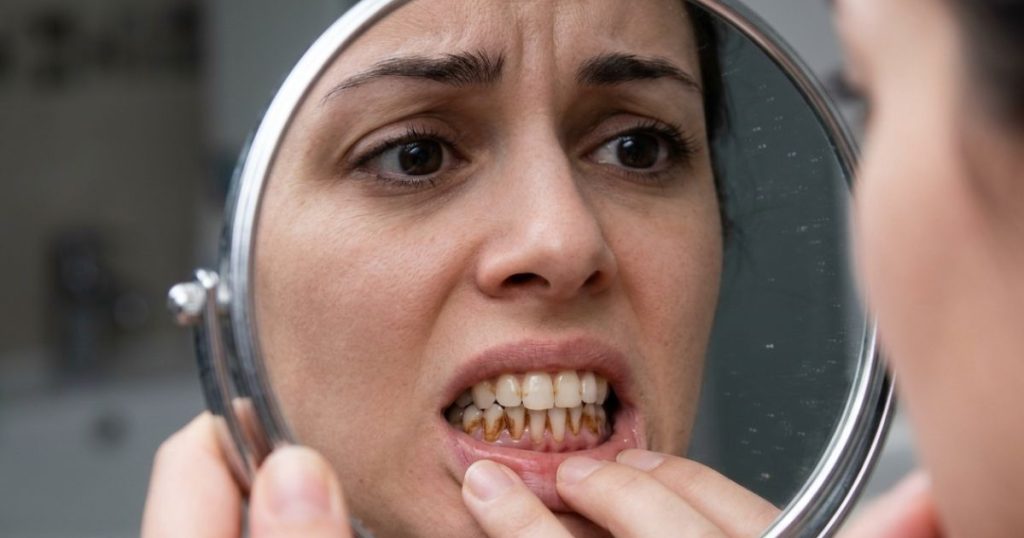
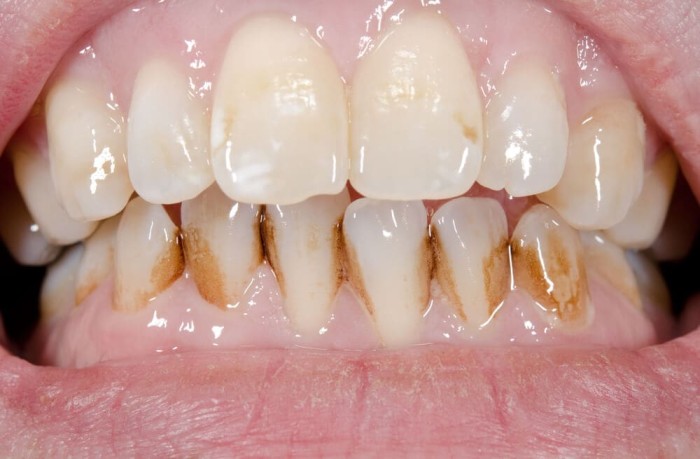
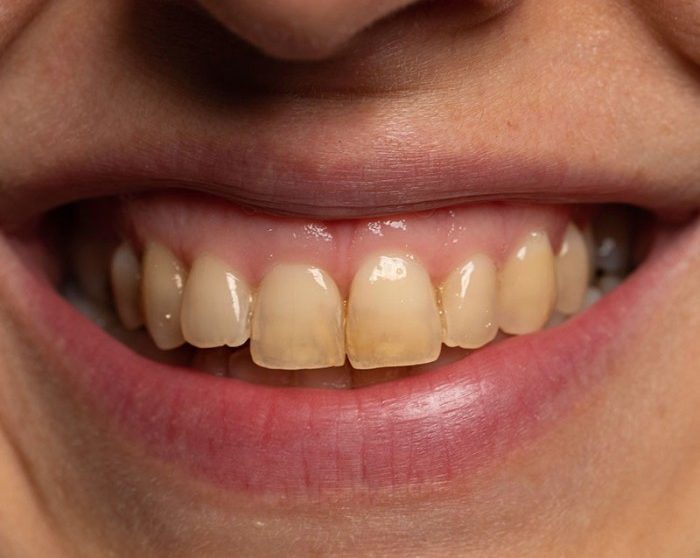
These sit on the outer enamel. Common sources include coffee, tea, red wine, cola, berries and dark sauces. Tobacco use leaves stubborn brown marks, often strongest near the gumline and between teeth. Plaque that hardens into tartar also traps colour and turns yellow-brown or darker over time. Because the gumline and spaces between teeth are harder to clean thoroughly, stains often show up there first.
Internal (Intrinsic) Stains
These develop inside the tooth. Excess fluoride during childhood can cause fluorosis with brown patches. Certain antibiotics such as tetracycline, taken while teeth are still forming, leave lasting colour changes. Trauma that damages the nerve, or the natural thinning of enamel with age that lets darker dentin show through, can also produce brown discoloration.[3]
Tooth Decay
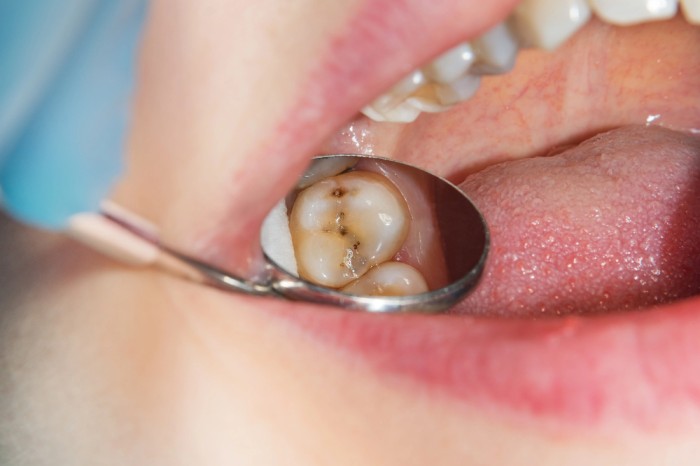
Early decay frequently appears as a fixed brown spot or mark rather than an obvious black hole. The change comes from the breakdown of enamel and the exposure of underlying tooth structure.
Read more: Can You Remove Tartar At Home?
Stain or Cavity? Signs You Should See a Dentist
Not every brown mark is the same. Some are harmless surface stains. Others point to early decay that benefits from a professional check. We can use a few simple observations to tell them apart:
| Feature | More likely a surface stain | More likely decay or something that needs checking |
|---|---|---|
| Location | Along the gumline, between teeth, or on flat surfaces | In grooves of back teeth or right at the contact point between two teeth |
| Surface feel | Smooth and level with the rest of the tooth | Rough, pitted, or catches a fingernail |
| Sensitivity | None | Sharp reaction to sweet, cold, or hot |
| Change over time | Builds gradually and matches habits (coffee, smoking) | Appears and then darkens or grows |
| Texture | Even | Soft or sticky in spots |
Surface stains usually stay smooth and develop slowly in line with daily habits. Decay often feels rougher or slightly hollow, shows up in harder-to-clean spots, and may bring sensitivity. Sudden brown marks between teeth or near the gums that also feel sensitive deserve a closer look sooner rather than later. A dentist can confirm the cause with a quick exam and, if needed, an X-ray.
Professional Treatment Options for Brown Stains
Once we know whether a brown mark is mainly on the surface, deeper in the tooth, or linked to decay, the next step is choosing the right professional approach. Options move from the simplest and least invasive to more restorative ones:
| What you’re seeing | What usually caused it | What clears it |
|---|---|---|
| A brown film that builds up over time, worse with coffee, tea or wine | Surface (extrinsic) stain | Cleaning and polishing |
| Hard yellow-brown deposits along the gumline or between teeth | Tartar | Scaling by a hygienist |
| Brown or white-brown patches on several teeth, often symmetrical | Fluorosis | Whitening for lighter marks; bonding or veneers for stubborn ones |
| A brownish-grey band across teeth formed in childhood | Medication such as tetracycline | Bonding or veneers. (Whitening rarely helps) |
| One tooth clearly darker than the rest | Trauma, or a tooth that has lost its nerve | An exam first, then internal whitening or a crown depending on cause |
| A rough, pitted or soft brown spot, sometimes sensitive | Decay | A filling |
If you’re not sure which row you fall into, that’s what the exam is for; a stain and an early cavity can look almost identical in the mirror.
Now, we explore possible treatments in more details.
Professional Cleaning and Polishing
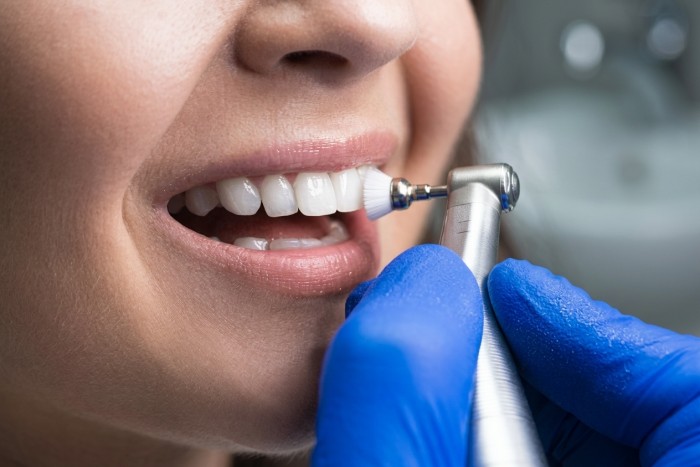
A thorough scaling and polishing (sometimes with airflow technology) is usually the first step. It removes tartar and surface stains that build up along the gumline and between teeth. Many brown marks clear completely after this visit, which leaves the enamel soft and healthy again.
Professional Teeth Whitening
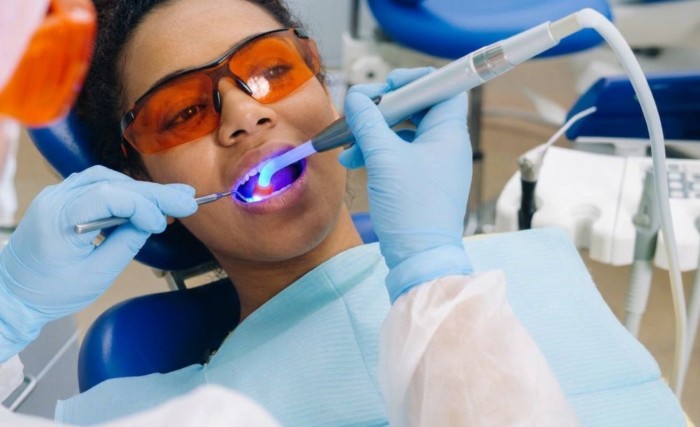
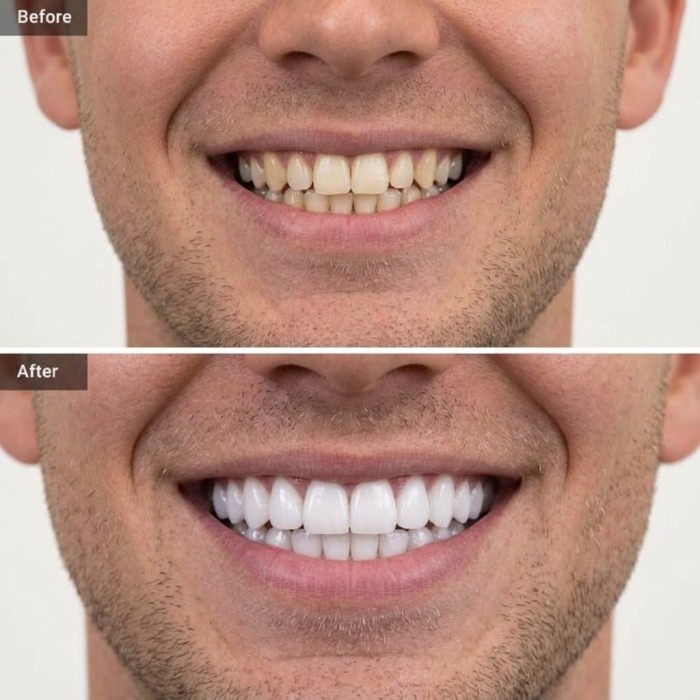
When surface stains remain after a cleaning, in-office or dentist-supervised whitening can lighten them further. Whitening works best on extrinsic colour. It has little effect on deep internal stains or any area affected by decay.
The ADA notes that whitening toothpastes and professional cleaning mainly reduce surface stains, while bleaching works by chemically changing the tooth’s colour.
Learn more: Teeth Whitening Results: How Long Do They Last and How to Maintain Them
Bonding and Veneers
For localized internal discolouration, fluorosis marks, or deeper colour changes that whitening cannot improve, composite bonding or porcelain veneers offer a reliable cover. Bonding is more conservative; veneers provide a longer-lasting, more complete mask when needed.
Fillings and Other Repairs for Decay
If the brown spot turns out to be an early or established decay, the affected area is cleaned out and restored with a filling. This both removes the problem and restores the tooth’s shape and strength.
A stain or something worse?
Most brown marks we see at Pape Dental Centre are simple stains that come off in a single cleaning. The few that aren’t are decay, and decay is easier to treat while it’s small. Visit us and you’ll know what it is and what it costs before anything begins.
Book a stain check-up
Other Factors That Shape Treatment Decisions
Besides the type and depth of the stain, these practical points also influence what we recommend:
- Existing fillings, crowns or veneers do not change colour with whitening and may need updating for a uniform look
- Whether the tooth’s nerve is alive or has been treated with a root canal (dead teeth often need a different approach)
- Current gum health and any active inflammation
- History of tooth sensitivity
- Patient’s age (full-arch whitening is generally avoided in children and adolescents with mixed dentition)
- Presence of active decay or structural weakness that should be addressed first
- Overall oral hygiene habits, which affect how long results last
- Patient expectations about the final appearance
Can You Remove Brown Stains at Home?
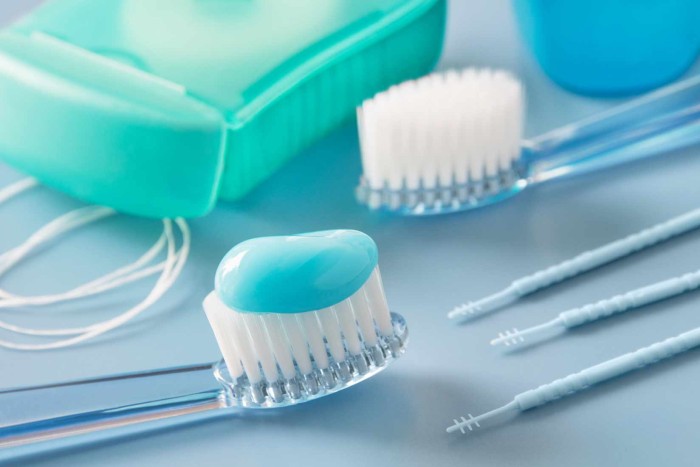
Mild whitening toothpaste, a soft brush, and daily flossing can reduce some surface stains over time. Rinsing with water after coffee, tea or red wine also helps limit new colour. Wait about 30 minutes after acidic drinks before brushing so enamel stays protected.
Avoid activated charcoal, coarse baking soda, abrasive powders or any harsh DIY scrub. These wear down enamel and can make stains look worse.
Tartar, internal stains and any mark linked to decay do not respond to home care and need professional attention.
Related topic: Can Charcoal Toothpaste Whiten Teeth? Our Dentist’s Investigations
Will Insurance or the CDCP Cover the Treatment?
Usually yes, but only when the treatment counts as care rather than cosmetics. That distinction decides most cases.
Cleanings, exams and fillings for decay count as medically necessary. Most private insurance plans cover them, and the Canadian Dental Care Plan does too.
Whitening, bonding and veneers done only to improve appearance are classed as cosmetic. Most plans exclude them, and the CDCP does not cover them at all.
Fees vary by practice, so it is best to ask for a written estimate before any treatment starts.
Read more: Teeth Whitening Costs Explained: Is It Worth It?
How to Prevent Brown Stains from Coming Back
The two areas that need the most attention are between your teeth and along the gumline, where colour builds up first and a brush alone can’t reach.
After a cleaning removes the stains, these habits stop them coming back
- Brush twice a day, two minutes, fluoride toothpaste. Angle the bristles at the gumline; that’s exactly where stains start.
- Clean between your teeth once a day. Interdental brushes or floss, whichever you’ll actually keep doing.
- Rinse with water after coffee, tea, red wine or cola. A quick swish lifts colour before it settles into the enamel.
- Use a straw for iced coffee and dark sodas when you can. It keeps the drink away from your front teeth.
- Wait about half an hour after acidic drinks before brushing, so you’re not scrubbing softened enamel.
- Don’t smoke or vape. Tobacco is the most stubborn stain source and the hardest one to reverse.
- Skip charcoal and abrasive DIY powders. They wear enamel down and can make the colour underneath look darker.
- Keep your recall appointments. Tartar can’t be brushed off at home; it needs a professional scaling.
Related guide: Teeth Whitening for Coffee and Tea Drinkers
Brown Stain Treatment at Pape Dental Centre
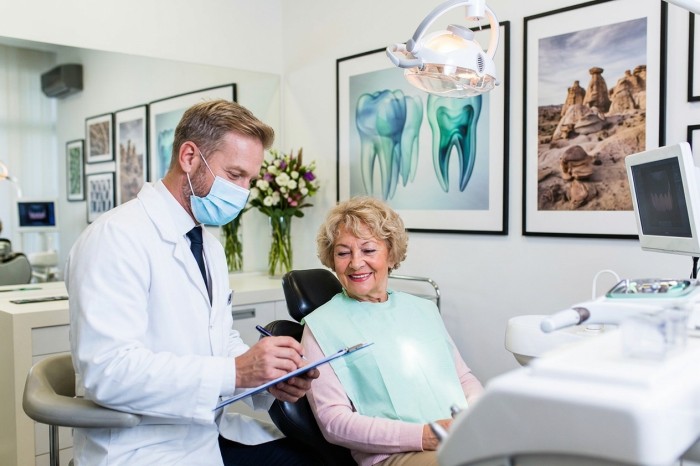
At our clinic on Pape Avenue, the first step is always an exam. We look at the mark, and take an X-ray if it sits between teeth or looks suspicious, so we can tell you whether it’s surface staining, internal colour, or decay. If it’s tartar and surface stain, we usually clean and polish in the same visit. Before any treatment begins, you get a written estimate showing what your insurance or the CDCP will cover.
Dr. Sasan Shahrbandi (RCDSO) has been practising dentistry for more than 20 years, with a focus on cosmetic and surgical work. If the stain needs more than a cleaning, he’ll walk you through what each option involves before you decide.
We bill most major insurers directly, including Canada Life, and we accept the Canadian Dental Care Plan.
You’ll find us at 759 Pape Ave, just north of Danforth and a two-minute walk from Pape Station, or you can call us at (647) 250-9685.
FAQ
Why do children get brown stains on their teeth?
Most often from fluoride exposure during tooth formation, liquid iron supplements, or plaque left along the gumline. A dentist can tell which.
Can brown stains between teeth be removed?
Yes, usually with professional cleaning. Keeping the spaces clean daily stops them returning, since a brush alone can’t reach there.
Will brown stains go away on their own?
Mild surface staining may fade slightly. Tartar and decay never do; they get worse, which is why an exam matters.
Are brown stains along the gumline always tartar?
Mostly, yes. But recession, root decay or gum inflammation look similar, and only an exam can tell them apart.
Why did brown stains appear suddenly?
New medication, a chlorhexidine mouthwash, or a dry mouth can do it. If a tooth gets darker on its own, you should have it checked as soon as possible.
Can brushing too hard cause brown stains?
Yes. Hard brushing wears enamel and exposes the darker root surface, which stains faster. A soft brush and light pressure protect it.
Ever had a brown mark that turned out to be something else?
Tell us below. Your experience might help someone else.